Skip to main content Skip to content

Software development cost refers to the money spent during every stage of a software project. It starts with planning and continues after launch. Each phase contributes to the overall cost of software development.
A small and straightforward project of custom software development in the UK starts from about £10,000. Business systems tend to cost from £30,000 to £80,000. Advanced enterprise software will cost more than £500,000.
Many factors influence the final price of a custom software project. They include the size of the project, types of the software, features, integrations, security, and software maintenance services. Your choice of development team also changes the budget.
Understanding software development costs helps UK businesses make smarter decisions. It also reduces surprises during the development process. This 2026 guide explains the average software development cost in the UK. You will also learn what affects pricing and how to reduce software development cost.
If you want to explore the process in more detail, our guide to Custom Software Development Outsourcing explains how businesses can outsource software development effectively.
Factors Affecting Software Development Cost
Every software project is different. That is why software development costs vary across the UK market. Below are the biggest cost factors.
Type of Software
The software type has the greatest effect on pricing. A simple internal system needs fewer development hours. An enterprise software platform needs many developers and advanced planning. AI software, FinTech Software Development, and healthcare platforms usually cost more because of their complexity.
Project Size
Larger projects need more time and resources. Small business tools may take weeks to complete. Large custom software development projects often require several months. More screens, users, and functions increase the total project cost.
Features and Functions
Every new feature adds to the initial development cost. Basic login system costs are lower compared to complex user management systems. Payment system, AI system, dashboard, and reporting require more effort to implement. More features will be associated with higher costs of software.
Design Requirements
Good UI/UX design improves the user experience. However, custom layouts and interactions require extra time. Companies investing in UI/UX Design Services tend to enjoy greater customer satisfaction.
Development Team
Your development partner also affects pricing. Experienced UK software developers normally charge higher rates. However, skilled teams often complete projects faster with fewer mistakes. This can reduce software development cost over time.
Technology Stack
Modern software uses different programming languages and frameworks. Some technologies require specialist developers. Advanced cloud systems, AI tools, and enterprise platforms usually increase costs.
Integrations
Many businesses connect software with existing tools. Examples include CRMs, accounting software, payment gateways, and ERP systems. Each integration increases development time and testing.
Security and Compliance
Security is essential for modern software. Industries like finance and healthcare require stronger protection. GDPR compliance also adds to the cost of software development.
Testing and Quality Assurance
Every software product needs testing before launch. Quality Assurance Services help find problems early. Quality testing reduces future software maintenance and improves software quality.
Ongoing Maintenance
Software needs constant maintenance after launch. This process includes bug fixations, security updates, backups, and performance upgrades. These recurring expenses should be taken into account when estimating software development cost.
Software Development Costs by Type
The type of software plays the biggest role in software development pricing. The table below shows average software development costs in the UK for 2026.
| Software Type | Typical Development Cost |
| Internal workflow system | £15,000–£50,000 |
| Web application | £30,000–£90,000 |
| Mobile application | £30,000–£150,000 |
| SaaS platform | £50,000–£150,000+ |
| Enterprise software | £150,000–£500,000+ |
| AI-powered software | £60,000–£200,000 |
Internal Workflow Systems
Internal business software helps employees work faster. Most internal tools are built to automate the processes rather than improving customer experience. They usually cost between £15,000 and £50,000.
Web Applications
Web applications are commonly used in UK businesses. Such applications usually have user accounts, database, dashboard, and third-party integrations. Most web applications cost between £30,000 and £90,000. For a broader understanding of how much different types of websites can cost, see our guide to website development costs. The amount UK companies pay depends on project complexity.
Mobile Applications
Mobile app development services continue growing across the UK. Cost of software development in 2026 depends on building for Android, iOS, or both operating systems. Most mobile apps cost between £30,000 and £150,000. If you wonder “how much does it cost to develop an app UK?”, then you should start by listing app features.
SaaS Platforms
Software-as-a-Service solutions provide the same services to multiple users via one platform. They require subscription management, billing, security, and scalability. SaaS products cost £50,000 to £150,000 or more.
Enterprise Software
Enterprise software targets large companies. Usually, such systems consist of numerous departments, user roles, and integrations. Most enterprise solutions cost about £150,000. Large digital transformation projects cost more than £500,000.
AI-Powered Software
AI software is becoming popular in 2026. These solutions combine traditional software with machine learning and automation. Many also require data pipelines and model training. Most AI software projects cost between £60,000 and £200,000.
Cost of Specific Features
| Feature | Typical Cost |
| User accounts and permissions | £2,000–£6,000 |
| Payment gateway integration | £5,000–£12,000 |
| Admin dashboard and reports | £8,000–£20,000 |
| Third-party API integration | £3,000–£12,000 |
| AI or machine learning module | £15,000–£50,000 |
| GDPR compliance features | £5,000–£15,000 |
Cost Breakdown by Development Phase
A software project does not spend money equally across every stage. Some phases require more work than others. Understanding the software development cost breakdown helps you compare quotes with confidence. The table below shows a typical cost split for a custom software development project.
| Development Phase | Typical Share of Total Cost |
| Discovery and planning | 10% |
| UI/UX design | 10–15% |
| Backend development | 35–40% |
| Frontend development | 20–25% |
| Quality assurance and testing | 10–15% |
| Deployment and launch | Around 5% |
Discovery and Planning
Discovery is the first step of every software project. The team gathers business goals and technical requirements. They also identify risks before development starts. A strong discovery phase reduces future changes and helps estimate software development cost more accurately.
UI/UX Design
The sphere of design includes user experience and visual appearance. Good design increases customer satisfaction and decreases user frustration. Many UK businesses invest in professional UI/UX Design Services for better results.
Backend Development
Backend development is the biggest share of the budget. It includes databases, business logic, security and integrations. Backend development often occupies about 40% of the total project cost.
Frontend Development
Frontend development includes all visual parts of the application that a user sees on the screen. They include forms, dashboard, navigation and responsive layout. Modern software should work well on any device.
Testing and Quality Assurance
Testing guarantees the quality of the software before its launch. Quality Assurance helps to find bugs and improve software performance. Early testing helps to avoid expensive changes after software release.
Deployment
This stage consists of deployment to production and configuration of servers. This process usually takes fewer resources, but is still important.
UK Developer Rates by Role and Region
Developer rates depend on the level of expertise, geographic region, and skills. Here is a list of average UK developer day rates in 2026.
| Developer Role | Typical Day Rate |
| Junior Developer | £300–£450 |
| Mid-Level Developer | £450–£600 |
| Senior Developer | £500–£700 |
| Software Architect | £700–£1,000 |
| AI Specialist | £700–£1,000 |
The average rate for UK software developer in 2026 is about £500 per day (£65 per hour). Rates of senior developers average at £625 per day (£80 per hour). Higher rates are usually accompanied by higher quality and speed of work. Experienced developers usually solve the issues faster.
Regional UK Rates
Location also affects development cost in the UK. London remains the most expensive market. Usually, regional agencies provide lower rates.
| Location | Typical Day Rate |
| Regional UK Agency | £350–£550 |
| London Agency | £600–£900 |
Projects in London are often 20-40% more expensive because of higher salary and other expenses. Many UK businesses now work with remote development teams. This approach helps reduce software development cost without reducing quality.
Offshore Development Comparison
Some companies also consider offshore development. Offshore teams normally charge less than UK agencies.
| Team Location | Typical Hourly Rate |
| UK Developers | £65–£80 |
| Eastern Europe | £28–£60 |
| South Asia | £20–£40 |
These lower rates do not represent UK software development cost. Businesses should compare experience, communication, and support before choosing a development partner. The cheapest option is not always the most profitable choice regarding total cost of ownership.
Agency vs Freelancer
When planning to start a software development project, many businesses compare agencies with freelance developers. Both options have advantages.
| Option | Typical Hourly Rate |
| Freelancer | £40–£100 |
| Software Development Company | £80–£150 |
When a Freelancer Works Best
Freelance developers are great for smaller software projects. They are suitable for simple websites, MVPs and small software updates. Lower rates of freelancers allow to reduce the price of the initial development. However, one person may not cover every technical area.
When an Agency Is Better
Software development agency provides you with a full team of software developers. It includes designers, developers, testers and project managers. Agencies also follow proven Software Development Methodologies. This improves quality and reduces project risks. Larger custom software projects normally benefit from agency support.
Hidden Costs That Increase Software Budgets
The estimated price of the software development project is not always the final price. There are some hidden costs that increase software development cost in 2026.
Scope Changes
Changing requirements during development increases costs. Even small changes can be quite expensive. Usually, projects without clearly defined goals spend 10-30% more money. Detailed project specification prevents this problem.
Technical Debt
Fast software development results in technical debt. Poor coding requires expensive fixes later. Most businesses spend 20-30% more money to fix poorly done software. Proper software development from the beginning saves money.
Cloud Hosting
After the launch of the software, hosting expenses will continue. Smaller systems usually require £100 to £500 per month. High-traffic enterprise software may need £2,000 to £8,000 per month. Price depends on the number of users, storage and computing power of your application.
Software Maintenance
Every software solution requires regular software maintenance. This procedure includes updating and upgrading software to improve its security, performance and compatibility. Most businesses should budget 15-25% of the initial software development cost per year for this purpose. Software maintenance guarantees protection of the software investment.
Third-Party Services
Modern software often depends on external services. These include payment gateways, email platforms, mapping tools, and AI services. Monthly subscription fees should be included in your cost estimation.
Future Improvements
Few software products remain unchanged after launch. Businesses often request new features during the first year. Planning future enhancements prevents unexpected spending. A long-term budget produces a more accurate total project cost. Understanding these hidden costs helps UK businesses avoid budget surprises. It also makes software development cost estimates more realistic.
Detailed Software Development Cost Breakdown
Software development cost depends on your goals and scope of your project. Greater budget allows to have more features, better security and scalability. The examples below show what UK businesses can typically build at different budget levels.
£10,000–£30,000: Small Business Software
This budget suits startups and small businesses. It focuses on solving one business problem.
What You Can Build
- Simple internal staff portal
- Customer enquiry management system
- Basic inventory tracking software
- Appointment booking tool
- Minimum Viable Product (MVP)
- Workflow automation software
Typical Project Scope
| Item | Typical Range |
| Development time | 4 – 8 week |
| Development team | 1 – 2 specialists |
| Design | Basic UI/UX |
| Testing | Standard QA |
Example Project
A local estate agency wanted a simple booking platform. The software connected with its existing CRM. It also sent automatic appointment reminders. Staff could manage bookings from one dashboard. The complete software solution cost around £18,000. The project finished within six weeks. This budget works well for businesses validating new ideas before making larger investments.
£30,000–£80,000: Professional Business Applications
This is the most common software development cost range for UK businesses. Projects at this level provide stronger functionality and better user experience.
What You Can Build
- Customer self-service portal
- Secure booking platform
- Business management system
- Custom CRM
- Mobile app for Android and iOS
- Membership platform
- Online learning system
Typical Project Scope
| Item | Typical Range |
| Development time | 3 – 6 months |
| Development team | 2 – 4 professionals |
| Design | Professional UI/UX |
| Testing | Full QA process |
Example Project
A training company wanted an online learning platform. The software allowed trainers to create courses. Students could track progress online. Certificates were generated automatically. Stripe payments were also integrated. The project cost approximately £52,000. Development took around four months. Many businesses asking about the cost of app development UK fall into this pricing range.
£80,000–£150,000: Advanced Business Platforms
Businesses needing more advanced software usually enter this budget range. These projects support larger customer bases and business operations.
What You Can Build
- Large eCommerce platform
- Multi-vendor marketplace
- SaaS platform
- Operations management software
- Multi-location business system
- Enterprise reporting platform
- Integration platform
Typical Project Scope
| Item | Typical Range |
| Development time | 6 – 12 months |
| Development team | 3 – 5 specialists |
| Documentation | Complete |
| Testing | Extensive |
Example Project
A wholesale distributor needed a custom ordering platform. The software displayed live stock levels. It supported customer-specific pricing. Credit accounts were managed automatically. The system also connected with an ERP platform. The software project cost around £115,000. Development finished after eight months. Projects in this category often include several third-party integrations.
£150,000+: Enterprise Software Solutions
Large organisations require enterprise-level software. These systems support many departments and thousands of users. Projects also demand stronger security and compliance.
What You Can Build
- Enterprise software platform
- Digital transformation programme
- AI-powered business platform
- Healthcare software
- FinTech Software Development solution
- Multi-country business platform
- Large customer marketplace
Typical Project Scope
| Item | Typical Range |
| Development time | 12–24 months |
| Development team | 5–10+ specialists |
| Delivery | Multiple phases |
| Support | Long-term |
Enterprise software projects usually become central business systems. Many continue growing after launch through regular improvements.
Ongoing Costs After Launch
Launching software is only the beginning. Every software product requires ongoing support. Ignoring these costs often creates future problems. The table below shows common ongoing expenses.
| Ongoing Cost | Typical Cost |
| Hosting and infrastructure | £50–£500+ monthly |
| Maintenance | 15–25% of build cost yearly |
| Third-party software | £0–£500+ monthly |
| User training | £500–£2,000 |
| Data migration | £2,000–£15,000 |
| Future improvements | 20–30% of Year 1 budget |
Hosting and Infrastructure
Cloud hosting keeps software available online. Costs depend on traffic, storage, and server performance. Larger software platforms need stronger infrastructure.
Maintenance
Software maintenance safeguards your investment. It includes bug fixes, security patches, backups, and performance improvement. Most UK software development companies recommend annual maintenance plans.
Third-Party Services
Many software products rely on external providers. These services can include payment gateways, SMS solutions, AI services, email services, and mapping tools. Most services have monthly costs.
Training
Staff requires training to work with new software. Well-designed software reduces training time. However, businesses should still include this cost in their budget.
Data Migration
Many companies replace older systems. Moving business data safely takes planning. Poor-quality data often increases migration costs.
Future Enhancements
Businesses regularly request additional features after launch. Customer feedback also creates new development opportunities. Planning future updates reduces unexpected spending.
Example Year-One Budget
The initial software development cost is only part of the investment. The first year usually includes several additional expenses.
| Cost Item | Example Cost |
| Initial software build | £50,000 |
| Hosting | £2,400 |
| Third-party services | £3,000 |
| Training | £1,000 |
| Data migration | £6,000 |
| Future enhancements | £8,000 |
| Estimated Year-One Total | £70,400 |
Starting from the second year, most businesses are only paying for maintenance, hosting, subscriptions, and new functionality. Annual expenses in such cases are usually between £12,000 and £20,000 per software solution created on a £50,000 budget.
This information gives insight into the real costs that should be taken into account. It also helps UK businesses plan future budgets with confidence.
Software Development Cost Trend in the Last 5 Years
Software development costs in the UK have increased steadily with inflation over the last five years. Higher salaries, cloud services, AI adoption, and security requirements have all raised development costs. The table below shows average project costs for a standard custom software solution.
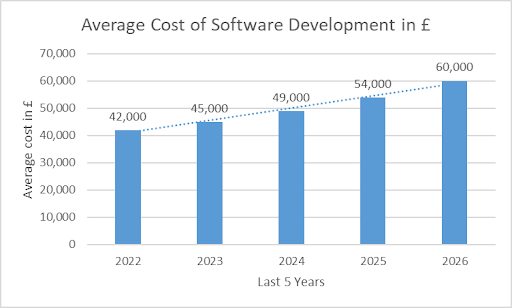
The average software development cost has increased by almost 43% over five years, i.e. from £42,000 (in 2022) to £60,000 (in 2026). Modern software requires stronger security and better user experiences. Businesses also expect cloud integration and AI-powered features. These requirements increase development hours and project complexity.
Estimated Software Development Costs for the Next 5 Years
Software development costs are expected to continue rising. Artificial intelligence will improve productivity. However, professional developers will still be in great demand. Businesses will spend more on cybersecurity and compliance as well. Average project expenses are summarized in the following graph:
These figures assume steady market growth of around 31% across the UK in the next five years. Based on the current trends, the average cost of software development is expected to increase from £64,000 (in 2027) to £84,000 (in 2031). Actual pricing will depend on project size and technology choices.
Tips to Reduce Software Development Cost
The right planning can reduce software development cost without reducing quality. Follow these practical tips.
- Define project requirements before development begins.
- Build an MVP before adding advanced features.
- Choose experienced software developers.
- Prioritise features with the highest business value.
- Avoid unnecessary changes during development.
- Invest in proper discovery and planning.
- Select proven Software Development Methodologies.
- Use reusable components where possible.
- Perform regular Quality Assurance Services throughout development.
- Choose scalable cloud infrastructure.
- Plan maintenance before launch.
- Compare several UK software development companies before deciding.
- Consider long-term value instead of the lowest price.
- Keep communication clear with your development team.
- Review project progress regularly.
Good planning lowers the total project cost. It also reduces hidden costs and future rework.
Conclusion
Knowledge of software development expenses is necessary for making the right investments. The average cost of software development in the United Kingdom differs significantly. The cheapest software can cost around £10,000. Meanwhile, large-scale enterprise software can cost over £500,000.
Final expenses depend on project scope, type of software, its features, development hours, and maintenance. Choosing the right development agency matters as well. Professional software development companies provide higher quality and make less expensive mistakes. Total cost of ownership is another important factor to consider as well.
FAQs
Most custom software efforts land somewhere between £10,000 and £500,000+ . The exact price comes down to how tangled the project is, and what specific features you need.
For a small company, software usually begins around £10,000. Bigger business systems can run from £30,000 to £80,000, depending on scope and other stuff.
Typically, the biggest influences are software type, overall project size , feature set, developer experience, third party integrations,and how much ongoing maintenance you expect.
Most mobile apps are priced in the range of £30,000 to £150,000. The final number hinges on features and which platforms you actually need supported.
Yes. Bespoke software boosts efficiency, helps business expansion, and delivers durable value, if it is planned properly from the start.